
SHTF Gear List: What to Pack When Everything Hits the Fan
The gear that actually gets you through a crisis — tiered by priority from immediate survival to sustained operations.

In This Dispatch
You don't get a second notice. When a major disruption hits — grid failure, natural disaster, social collapse — the people who survive the first 72 hours are the ones who already had their gear sorted before the sirens started. A solid SHTF gear list isn't paranoia. It's just good planning.
This guide walks through a tiered equipment framework for getting through a short-term SHTF scenario. It's organized by priority so you can build your kit methodically — starting with what's most critical and working down to what's nice to have. Whether you're putting together a dedicated bug-out bag or hardening the equipment you already keep in your vehicle, this list gives you a framework to work from.
This is a cluster post supporting our Bug-Out Bag Checklist. If you haven't read that one yet, start there — this builds on it directly.
What SHTF Actually Means — and What It Doesn't
SHTF stands for "Shit Hits the Fan." It's the scenario where normal infrastructure — power, water, communications, law enforcement — stops working for an extended period. That could be hours, days, or weeks depending on the trigger.
What it doesn't mean: zombie apocalypse. The gear and mindset that serves you better than fantasy scenario loadouts is the same gear that gets you through a week-long power outage after a hurricane. Build for realistic disruptors. The realistic ones are what you should be optimizing for anyway.
Tier 1: Immediate Survival Gear — The Non-Negotiables
These are the items that, if you had nothing else, would give you the best chance of staying alive in the first 24-48 hours of a crisis. Everything in this tier should fit in a small kit that lives somewhere accessible — your nightstand, your vehicle's center console, a dedicated pouch on your plate carrier.
Water and Hydration
You can survive weeks without food. You can't survive three days without water. That's the starting fact for any SHTF essentials kit.
- Water storage: Two liters per person per day minimum. A 3-liter hydration bladder plus a hard-sided water bottle gives you both supply and portability.
- Water filtration: A portable filter ( Sawyer Mini or similar) can make questionable sources safe to drink. Carry it in your primary kit.
- Purification tablets: Redundancy if the filter clogs or you run out of stored water.
- Collapsible canteen: Saves space when empty, expandable when full.
First Aid and Trauma Care
When infrastructure breaks down, EMS response time disappears. If someone in your group takes a gunshot wound, falls, or suffers a penetrating injury, professional help isn't coming in the first 72 hours.
- CAT Tourniquet (Gen 7): The gold standard for extremity hemorrhage control. If you only buy one piece of medical gear, this is it. Carry it accessible — not buried in a kit.
- Pressure dressing: Israeli bandage or similar. Covers junctional wounds where a tourniquet won't work.
- Chest seal: For penetrating chest injuries. Tension pneumothorax kills fast and is entirely preventable with a proper seal.
- Hemostatic gauze: Packed into wounds that won't stop bleeding with direct pressure alone.
- NPA with lubricant: Nasopharyngeal airway — keeps the airway open in unconscious patients.
- Shears and marker: Shears cut clothing fast. Marker writes the time of tourniquet application — critical for downstream medical providers.
- Trauma kit storage: The Recon24 Survival Kit comes in a MOLLE-compatible hard-shell case that keeps trauma medical components protected and organized.
Fire, Light, and Signaling
- Lighter or ferro rod: Redundant fire starting — BIC lighter as the immediate option, ferro rod as the survival backup that never runs out.
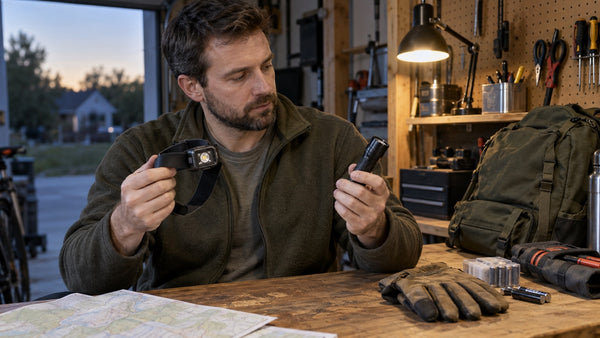
- Tactical flashlight: A high-lumen handheld light with a strobe mode. Navigate dark spaces, signal rescuers, temporarily blind a threat. Keep one in your kit and one on your person.
- Chem lights: Providing light without the signature of a flashlight at night. Mark your position, mark a trail, mark a casualty collection point.
- Whistle: Three blasts — the universal distress signal. Lightweight, no batteries required.
Shelter and Thermal Protection
Hypothermia kills in conditions above freezing if you're wet and exposed. Even a mild Climatech sleeping bag and a mylar emergency blanket dramatically extends your survivable temperature range.
- Emergency mylar blanket: Weighs nothing, takes up almost no space, reflects 90% of body heat back. Every kit needs two.
- Soft-shell insulating layer: The M23 Tactical Jacket packs down small, is waterproof and wind-resistant, and provides real insulation — not just vapor barrier insulation like mylar alone. If your SHTF scenario involves cold weather, this is Day 1 gear.
- Rain shell: Keeping dry is as important as staying warm. Wet clothing saps body heat at an accelerated rate.
Tier 2: Sustained Operations Gear — Surviving Past 72 Hours
Once your immediate survival needs are covered, the next layer of SHTF gear list priority focuses on sustaining yourself over an extended disruption — where food, tools, and information become the limiting factors.
Food and Caloric Intake
- Emergency rations: 2,000+ calories per person per day in compact form. Freeze-dried meals or protein bars — whatever fits your kit weight budget.
- High-energy snacks: Nuts, nut butter pouches, hard cheese. These keep better than chocolate and provide sustained energy.
- Electrolyte packets: Critical when water intake is irregular and food is sparse. Replace what you're losing through exertion and stress.
Tools and Implements
When everything breaks down, you need to be able to manipulate your environment — cut material, build shelter, repair gear, catch food.
- Multipurpose tool or folding knife: Fixed blade for serious cutting tasks, folding knife for everyday utility. Needs to hold an edge and handle pressure without breaking.
- Mechanical tool set: The BattleGear 132-in-1 Screwdriver Set handles everything from loosening optic mounts to driving screws for improvised shelter construction. It's small enough to live in your kit permanently.
- 250-lb test paracord: Shelter building, gear repair, makeshift tourniquets, securing loads — paracord has dozens of uses. Carry at least 50 feet.
- Duct tape: Field repairs on gear, tape on feet as blister treatment, waterproofing, weapon maintenance. The most versatile item in any kit.
- Compass and topographical map: Digital navigation fails when the grid goes down. A paper map and compass work regardless of connectivity.
Storage and Transport
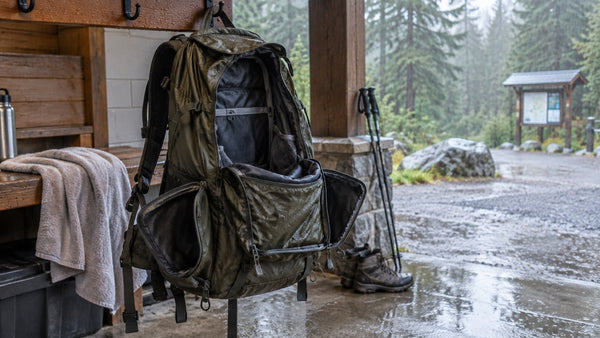
The 45L Tactical Backpack hits the sweet spot for SHTF transport — large enough to carry Tier 1 + Tier 2 essentials for 3+ days, small enough to be mobile in an urban or wilderness environment. The MOLLE system lets you attach additional pouches for mission-specific customization.
For a smaller footprint, the GO-Bag Tactical Sling works as a secondary kit for situations where a full rucksack is impractical — vehicle-based kits, bedside defense, or a grab-and-go pouch when you need to move fast with minimal gear.
Tier 3: Defense and Mobility — Getting Out, Staying Safe
When a scenario forces movement, having a clear plan for how you'll navigate and the capability to protect yourself en route matters as much as anything else in your kit.
Weapon Systems and Access
Platform choice depends on your legal environment, training level, and threat assessment. For most civilians, a compact AR-15 configuration is the right balance of capability and controllability.
- Primary firearm: Semi-automatic rifle or carbine in an intermediate caliber (5.56/.223 or .300 BLK). Effective at typical engagement distances, manageable recoil, abundant ammunition.
- Compact storage solution: The AR Folding Stock Adapter reduces overall length by 8+ inches when folded — significant for vehicles, tight quarters, or grab-and-go scenarios where your rifle needs to be manageable in confined spaces.
- Handgun plus holster: If your primary is a long gun, carry a handgun as a backup in a quick-access holster.
- Spare magazines: Carrying three or more spare mags for your primary weapon. Speed reloads matter when the reload count is high.
Navigation and Situational Awareness
- Battery-bank phone charger: Solar-compatible or high-capacity (20,000mAh+) to maintain phone charge for maps, communication, and reference materials offline.
- Hand-crank or solar radio: NOAA weather band radio keeps you informed of developing conditions when broadcast infrastructure is degraded.
- Notebook and pen: Record observations, mark waypoints, log important information. Simple technology that requires no power.
Documents and Financial Redundancy
- Cash (small bills): When electronic payment fails, cash still works — especially in smaller denominations.
- Copies of critical documents: ID, permits, insurance, critical medical records. Waterproofed in a sealed bag.
- Precious metals (optional): For long-duration scenarios where fiat currency has collapsed, Small gold/silver coins or rounds are a historical hedge. Not necessary for short-term disruption.
Building Your SHTF Kit: Where to Start
The most common mistake people make when building a doomsday prepper gear list is buying everything at once and never actually checking their kit. Your gear list only matters if you're familiar enough with your equipment to use it under stress. A quality kit that's been reviewed and maintained is worth more than a $3,000 loadout you've never actually unpacked.
Start with Tier 1. Get that solid. Then add Tier 2. Then Tier 3. Every layer you add should fit inside the layer above it — meaning your full kit should be one manageable grab.
The Recon24 Survival Kit and 45L Tactical Backpack give you the shell to build something real. Add the items on this list as your budget and priorities allow.
Frequently Asked Questions
How much should a SHTF bug-out bag weigh?
A fully loaded SHTF bag should weigh no more than 20-25% of your body weight for sustained mobility. For most people, that's 30-45 pounds maximum. Pack lighter than you think necessary — you may need to move fast, climb, or carry others.
What's the difference between a SHTF kit and a bug-out bag?
A bug-out bag is the clothing and equipment you grab when you need to leave your location immediately. A SHTF kit is more comprehensive — it includes gear for sheltering in place, vehicle-based kits, and home fortifications. A bug-out bag is one component of a complete SHTF preparedness plan.
What's the most overlooked item on a SHTF gear list?
Water purification and redundant fire-starting are both commonly underweighted. But the most overlooked item is training — a CAT tourniquet means nothing if you've never practiced applying it one-handed under stress. Buy the gear, then train with it.
Related Gear & Guides
- Bug-Out Bag Checklist: The Complete 72-Hour Guide
- How to Pack a Bug-Out Bag: Weight, Organization, Accessibility
- Shop Tactical Backpacks
- Shop Survival Gear
- Shop First Aid & Trauma
20% off Survival & Emergency Gear
Use code EDGE20 at checkout · Free U.S. shipping
Shop Survival GearWas this dispatch helpful?
Thanks for the feedback.

BattleGear™ 132-in-1 Precision Screwdriver Set - Tactical Repair Tool Kit with Magnetic Bits
132 Bits. One Tool. Zero Excuses When Your Gear Needs Fixing. When you're out in the field, at the range, or handlin...