
Weekly News Roundup: B-52 Modernization Troubles, Red Sea Escalation, and Army Gear Contracts
The week's top defense stories: B-52 modernization setbacks, Red Sea maritime threats, Army vehicle contracts, and uniform policy updates.

In This Dispatch
The defense world kept pace this week with a mix of sobering budget realities, escalating maritime threats, and some bright spots in Army procurement and uniform policy. Here's what matters from the past seven days.
B-52 Modernization Program Faces Cost and Schedule Headwinds
The Government Accountability Office dropped a reality check on the U.S. Air Force's B-52 Stratofortress modernization effort last Thursday, finding that the approximately $21 billion overhaul is behind schedule and over budget on multiple fronts.
According to the GAO's July 31 report (GAO-26-109272), the engine and radar programs — two of the largest components of the upgrade — have each experienced cost growth exceeding 30 percent and schedule delays of more than three years since entering early development. Ten of the 13 programs that make up the overall B-52 overhaul are showing some degree of cost growth, schedule slip, or performance challenges.
The Air Force plans to keep the B-52 in service through 2050, nearly a century after the bomber first entered use. The last of the current fleet of 75 B-52s was delivered in 1962. The modernization covers new engines, communications systems, and radar — essentially a nose-to-tail rebuild of an aircraft that has already proven its endurance across seven decades of service.
The watchdog's concern is that production of modernization components is planned to begin around the same time developmental testing starts — a concurrency that increases risk if either program hits further snags. The Air Force will need to manage that balance carefully as the program moves forward.
Red Sea Shipping Threats Intensify
Maritime security in the Red Sea grew more precarious this week as the European-led Operation Aspides reports a major surge in escort requests from commercial vessels. The uptick follows the Houthis of Yemen imposing a blockade on Saudi shipping and launching direct attacks on the kingdom's vessels and oil infrastructure in the Red Sea.
The escalation comes after U.S. and Israeli operations against Iran in February, which appears to have emboldened Houthi forces. The task force commander told TWZ that commercial vessels are seeking armed escorts at record rates as the threat picture darkens over one of the world's most critical maritime chokepoints.
The Red Sea connects to the Suez Canal and carries significant portions of global oil and consumer goods traffic. Sustained disruption has implications for supply chains and insurance rates that extend well beyond the immediate theater.
BC Customs Selected for Army ISV-H Prototype
In Army procurement news, BC Customs — working with Raglan — was selected this week for an Other Transaction Agreement to build prototypes of the Infantry Squad Vehicle-Heavy (ISV-H). The program has an Army Acquisition Objective of 606 platforms.
The ISV-H is designed to give infantry squads improved mobility on the battlefield, with exportable power to support tactical operations and onboard power for mission command while on the move. Army Contracting Command-Detroit Arsenal chose the BC Customs-Raglan team as one of the participants in a competitive, multi-phase selection process. The government anticipated awarding up to three agreements or contracts at this phase.
BC Customs CEO Brandon Johnson said the company was built around a straightforward philosophy: vehicles that perform when the mission demands it. The ISV-H competition is a meaningful opportunity for smaller vehicle integrators to demonstrate capability ahead of a potential full production award.
Army Ramps Up Counter-UAS Technology
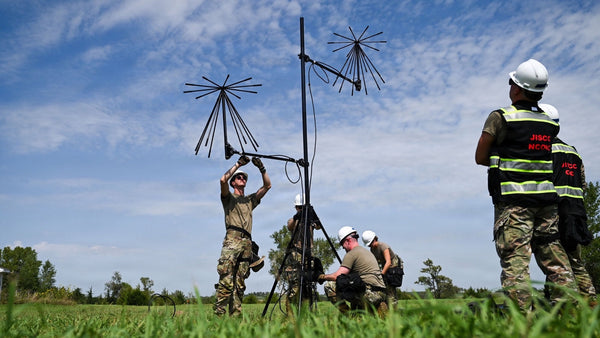
The Army's C5ISR Center — part of the Command, Control, Communications, Computers, Cyber, Intelligence, Surveillance, and Reconnaissance community — hosted a landmark counter-small unmanned aircraft systems event in May at Fort A.P. Hill, Virginia.
Called "Warden," the event brought together 17 defense technology companies to test their C-UAS systems against a range of aerial threat scenarios, including drone swarms. Participants fielded lasers, radio frequency jammers, and intercept drones against more than a dozen UAS types executing realistic attack patterns.
Outcomes from Warden include improved detection ranges for incoming threats, more resilient sensor algorithms, and systems with reduced size, weight, and power requirements suitable for dismounted rifle squads. The goal is to get C-UAS capabilities into the hands of Soldiers without encumbering them with bulky equipment. The data collected is being used to refine Department of Defense performance standards for counter-drone evaluation going forward.
Jungle Tab Authorized Army-Wide
Soldiers who earned their Jungle tab at the Army's Jungle Operations Training Center in Panama or Hawaii — or the now-defunct program in the 1990s at Fort Sherman — can now wear it service-wide. The Army approved the skill badge for wear across the force in a July 22 memorandum.
The Jungle tab joins a short list of skill tabs — Ranger, Sapper, and others — that soldiers can wear as a permanent part of their uniform. Retroactive eligibility means veterans who completed jungle warfare training years ago and are still serving can now qualify. It's a recognition that jungle and tropical operations expertise is growing in relevance as the Pentagon shifts focus toward Indo-Pacific contingencies.
Frequently Asked Questions
How long will the B-52 Stratofortress remain in service?
The Air Force plans to keep the B-52 in service through 2050, which would be nearly 100 years after the bomber first entered use.
What is the Infantry Squad Vehicle-Heavy (ISV-H)?
The ISV-H is a next-generation light vehicle designed to enhance infantry squad mobility on the battlefield, with onboard power systems capable of supporting tactical operations and mission command while the squad is on the move.
Where can soldiers wear the Jungle tab?
The Jungle tab is now authorized for wear Army-wide, meaning soldiers who earned it through the Jungle Operations Training Center in Panama or Hawaii — or retroactively through prior jungle training programs — can wear it as a permanent skill badge anywhere in the service.
Sources: Task & Purpose, TWZ (The War Zone), Soldier Systems Daily
Tactical gear, range accessories, and survival essentials — priced for shooters who actually use their gear.
Shop the store →Was this dispatch helpful?
Thanks for the feedback.

BattleGear™ 132-in-1 Precision Screwdriver Set - Tactical Repair Tool Kit with Magnetic Bits
132 Bits. One Tool. Zero Excuses When Your Gear Needs Fixing. When you're out in the field, at the range, or handlin...