
How to Build a 72 Hour Kit: Complete Survival Preparation Guide
Three days. One pack. Everything you need to survive when the grid goes down — built right the first time.

In This Dispatch
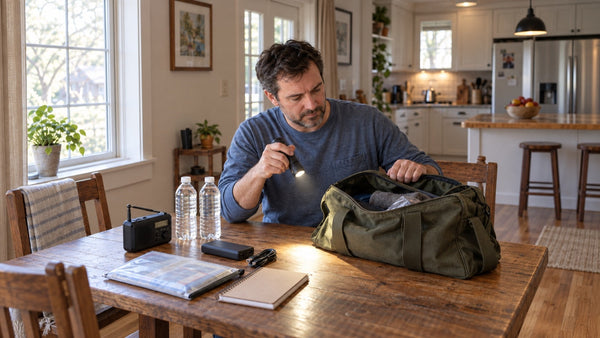
When the grid goes down and normal resupply becomes impossible, the difference between weathering the storm and becoming a statistic comes down to one thing: preparation. A well-assembled 72-hour kit — sometimes called a bug-out bag or emergency go-bag — gives you and your family 72 hours of self-sufficiency while roads clear, services restore, or you execute a planned evacuation.
This guide walks you through how to build a 72 hour kit from scratch using a priority-tiered system. Whether you're starting with nothing or upgrading an existing kit, you'll know exactly what belongs, what doesn't, and how to keep it ready to grab and go.
What Is a 72-Hour Kit and Why 72 Hours?
The Federal Emergency Management Agency (FEMA) recommends that Americans maintain at least a three-day supply of essentials in case of emergency. The 72-hour window represents the realistic upper bound for first responders and emergency management to establish basic supply chains after a widespread disaster — hurricane, earthquake, ice storm, or civil unrest.
A 72 hour kit is not a camping kit. It's a self-contained personal sustainment pack meant to keep you alive and mobile when normal infrastructure fails. You shouldn't need to access your car, your home, or any external resource for three days.
- 72 hours per person — water, food, first aid, clothing for three full days
- Lightweight enough to carry — target 20-30 lbs fully loaded
- Grab-and-go — everything in one pack, staged near your exit point
- Updated seasonally — clothing and consumables rotate with the calendar
Tier 1: Immediate Survival — The Non-Negotiables
These items address immediate life threats. Without them, nothing else matters. Prioritize these categories first before spending any budget on comfort items.
Water and Hydration
Humans can survive 3 weeks without food but only 3 days without water — and activity, heat, and stress dramatically accelerate dehydration. Plan for a minimum of one gallon per person per day, split between drinking and basic hygiene.
- Two 1-gallon water jugs per person (rotated quarterly)
- Two portable water filters or purification tablets
- Collapsible water bottles (pack flat, fill when needed)
- Rehydration salts or electrolyte packets
First Aid and Trauma
A 72-hour kit requires a first aid kit that goes beyond basic bandages. In a disaster scenario, emergency services are overwhelmed — you may be responsible for treating your own family for minor wounds and potentially life-threatening injuries.
- CAT Tourniquet (Gen 7) — for severe hemorrhage; one-handed application design means you can self-apply if needed
- Israeli/emergency pressure bandages (2-3)
- Chest seal pads for penetrating torso wounds
- Hemostatic gauze (Celox or QuikClot)
- NPA (Nasopharyngeal airway) with lube
- Trauma shears, nitrile gloves, permanent marker (for documenting injury time)
- Standard first aid supplies: gauze, tape, antiseptic, pain relievers, prescription medications (rotated seasonally)
CAT Tourniquet (Gen 7)
Military-adopted one-hand tourniquet. The Gen 7 features a free-moving internal band and composite windlass for maximum pressure. If you only buy one trauma item, make it this.
Shop Now - Free ShippingShelter and Warmth
Hypothermia kills even in mild temperatures if you're wet and exposed. Even if your region doesn't experience freezing conditions, wind and rain create dangerous heat loss.
- Emergency mylar thermal blankets (2 per person — one as ground insulation, one as outer layer)
- 56-inch emergency poncho (waterproof, windproof, doubles as ground cloth)
- Lightweight wool or synthetic blanket
- Disposable hand and foot warmers (pairs)
Tier 2: Sustained Operations — Food, Tools, and Communications
Once immediate survival is covered, focus on the systems that let you function independently for three days without external support.
Food and Caloric Sustainment
Plan for 2,000+ calories per person per day. In a high-stress emergency, your body burns fuel faster than normal. Lightweight, calorie-dense foods that require no cooking are ideal.
- Emergency ration bars (3600-calorie 3-day supply packs are compact and shelf-stable for years)
- Peanut butter packets or nut butter squeeze pouches
- Jerky or dried meat (high protein, long shelf life)
- Hard candies and instant coffee/tea packets (morale matters)
Tools and Fire Starting
A 72-hour kit needs a compact but functional tool suite. Quality tools last generations — invest here.
- Multi-tool or folding knife (fixed blade for reliability)
- Fire starter: ferrocerium rod + waterproof matches (both, redundancy matters)
- 40-foot paracord (type III, 550-lb rated)
- Duct tape (2-inch roll, wrapped around a water bottle or travel-sized)
- Compact survival saw or wire saw
- Leather man-style multi-tool with pliers and screwdrivers
Lighting and Power
- LED headlamp (hands-free, long battery life) + spare batteries
- Solar phone charger or hand-crank radio with USB port
- AAA and AA battery sets (double-A for headlamp, triple-A for radio)
Communications and Information
- Battery-powered AM/FM/NOAA weather radio
- Whistle (three blasts signals distress universally)
- Notebook and pen (leave notes for family if separated)
- Cash (small bills, $20 and under — ATMs and card readers fail)
Tier 3: Defense, Hygiene, and Documents
These categories are often overlooked but critical for a realistic emergency scenario.
Personal Defense
In widespread emergencies, law enforcement response times stretch or collapse entirely. A compact self-defense option provides personal security during movement.
- Concealed carry firearm + spare magazine (state law permitting)
- OC pepper spray (keychain model for accessibility)
Hygiene and Sanitation
Diarrhea and infection from unsanitary conditions are genuine threats in a 72-hour scenario when flush toilets and clean water aren't available.
- Travel toilet paper and hand sanitizer (mini bottles)
- Biodegradable camp soap
- Wet wipes (packaged, not individual — better shelf life)
- Ziplock bags for waste disposal and gear protection
- Feminine hygiene supplies as applicable
Documents and Cash
- ID, passport, insurance documents (copies in waterproof sleeve)
- Emergency contact list (printed, laminated)
- Cash ($200 in mixed small bills)
- Insurance card copies
Pack Selection: The Foundation of Your Kit
Your 72 hour kit is only as good as the pack that carries it. A quality tactical backpack rated for field use handles the weight, weather, and abuse of an emergency scenario in a way that a school backpack or rolling luggage simply cannot.
Look for:
- Capacity: 45-65 liters for a full 3-day kit. Smaller packs work for ultra-lightweight personal kits.
- Frame and harness system: Padded shoulder straps, sternum strap, and waist belt distribute weight for extended carry.
- MOLLE compatibility: Modular attachment points let you add pouches for mission-specific needs.
- Water resistance: Look for a built-in rain cover or water-resistant shell.
- Access points: Top-load with bottom compartment access is ideal for separating clothing from trauma supplies.
Recon24 Survival Kit
MOLLE-compatible hard-case survival kit with 58 essential components. Pre-packed with trauma supplies, water filtration, fire starting, and shelter — everything in Tier 1 and most of Tier 2 covered in one modular unit.
Shop Now - Free ShippingThe Recon24 Survival Kit is designed as a modular core for your 72-hour kit. It can serve as the hard starting point that you supplement with additional food, clothing, and personal items rather than building from absolute zero. For those already owning consumables, the 45L Tactical Backpack gives you the MOLLE platform to build out a fully customized kit tailored to your specific threat profile and climate.
How to Organize Your Pack: Accessibility Hierarchy
A perfectly packed kit with the wrong organization will fail you when it matters most. Items you need immediately — trauma supplies, water, fire — must be accessible without unpacking everything.
Top of Pack (Immediate Access)
Reach into the top compartment or outer pockets without setting the pack down:
- CAT Tourniquet (Gen 7) — accessible with either hand while pack is on
- Israeli pressure bandage
- Water (at least one bottle)
- Fire starter
- Headlamp
Main Compartment (Daily Access Items)
- Food rations
- Clothing (rain jacket, insulation layer)
- Communication gear
- Cash and documents
Bottom Compartment (Reserve/Seasonal Items)
- Sleeping bag or heavy insulation (cold-weather kit)
- Spare clothing
- Camp chair or ground pad
Outer MOLLE Loops (Attach as Needed)
- Admin pouch (documents, radio, small tools)
- Hydration bladder sleeve
- Helmet or body armor (if part of your defense plan)
The 20% Body Weight Rule
Military doctrine recommends a loaded pack not exceed 20% of your body weight for sustained movement over uneven terrain. For a 180-pound adult, that's 36 lbs maximum. For a 130-pound adult, 26 lbs. Exceeding this threshold dramatically increases fatigue, joint wear, and injury risk during evacuation on foot.
If your kit exceeds 20% body weight, audit ruthlessly. Cross off the "nice to have" items until you're at or below the threshold. A lighter kit you can actually carry beats a perfect kit you can't lift.
Seasonal and Climate Adjustments
Your 72 hour kit should evolve with the calendar. Rotate food rations quarterly and update clothing layers before seasonal transitions.
- Winter: Swap the mylar blanket for a rated sleeping bag. Add chemical hand warmers, insulated gloves, and a balaclava.
- Summer: Reduce insulation weight, increase water capacity, add sunscreen and insect repellent.
- Wet season: Double-bag clothing in waterproof compression sacks. Add a pack towel and extra foot care supplies.
Testing and Maintenance
An untested kit is a liability. Once assembled, take your 72 hour kit on a half-day hike at least once per year. Walk 3-5 miles with it fully loaded and note what you actually used versus what sat at the bottom untouched.
- Rotate consumables (water, food, batteries, medications) every 6 months
- Check expiration dates on ration bars and medical supplies
- Verify equipment function — test the water filter, fire starter, and headlamp annually
- Update for life changes — new family members, pets, or health conditions require kit modifications
Frequently Asked Questions
How much does a complete 72 hour kit cost?
A quality 72 hour kit with durable components runs $300-$600 if building from scratch. Pre-built kits like the Recon24 Survival Kit cover the core trauma and survival items for around $150-$200, then you supplement with food, clothing, and personal items. This is a place where quality pays dividends — cheap components fail when you need them most.
Should I keep my 72 hour kit in my car or at home?
Both, ideally. A home kit staged near your primary exit covers house fires and structural emergencies. A lightweight vehicle kit (smaller version of your main pack) covers roadside breakdowns and situations where you're away from home when disaster strikes. The vehicle kit should be compact enough to grab quickly — aim for a 3-day personal kit in a 30L pack that lives under the passenger seat.
What's the difference between a 72 hour kit and a bug-out bag?
Practically, they're the same thing — the terms are used interchangeably. "Bug-out bag" comes from military/exit strategy terminology; "72 hour kit" is more common in emergency preparedness circles. Both refer to a self-contained pack that sustains you for three days when normal infrastructure fails. Some preparedness communities use "72-hour kit" specifically for home-staged kits and "bug-out bag" for vehicle or work-staged packs, but the contents are nearly identical.
Can I add a firearm to my 72 hour kit?
Yes, if your state law permits. A firearm is a legitimate personal defense tool in a law-enforcement-absent scenario. Store it securely in your pack — accessible to you but not to children or unauthorized individuals. Include spare magazines, ammunition, and any required permits for your state. Remember: a firearm requires training to deploy effectively under stress. If it's in your kit, train with it regularly.
Related Gear & Guides
- How to Pack a Bug Out Bag: A Practical Guide for 2026
- SHTF Gear List: What to Pack When Everything Hits the Fan
- Shop Survival Gear
- Shop Tactical Backpacks
- Shop First Aid & Trauma
20% off Survival & Emergency Kits
Use code EDGE20 at checkout · Free U.S. shipping
Shop Survival GearWas this dispatch helpful?
Thanks for the feedback.

BattleGear™ 132-in-1 Precision Screwdriver Set - Tactical Repair Tool Kit with Magnetic Bits
132 Bits. One Tool. Zero Excuses When Your Gear Needs Fixing. When you're out in the field, at the range, or handlin...