
How to Set Up a Compact First Aid Pouch for Everyday Carry
What to pack in a compact everyday first aid pouch, how to organize it so you can find things fast, and how to keep it stocked.

In This Dispatch
A full home first aid kit rarely goes where you go. A small, well-organized pouch can. This guide shows how to set up a compact everyday first aid pouch: what to put in it, how to arrange it so you can find things fast, and how to keep it current.
What should go in a compact first aid pouch?
Start from a recognized list, then scale it down to what fits and what you are likely to need. The American Red Cross recommends that a family first aid kit include items such as these:
- Adhesive bandages in assorted sizes
- Sterile gauze pads and a roller bandage
- Adhesive cloth tape
- Antiseptic wipe packets and antibiotic ointment packets
- Non-latex gloves
- Tweezers
- An emergency blanket
- An instant cold compress
- Emergency first aid instructions
The Red Cross also advises adding personal items, such as your own medications and emergency phone numbers, and anything your health-care provider suggests. A small everyday pouch will hold fewer of each item than a home kit, so prioritize the supplies you would reach for first.
How to organize the pouch so you can find things fast
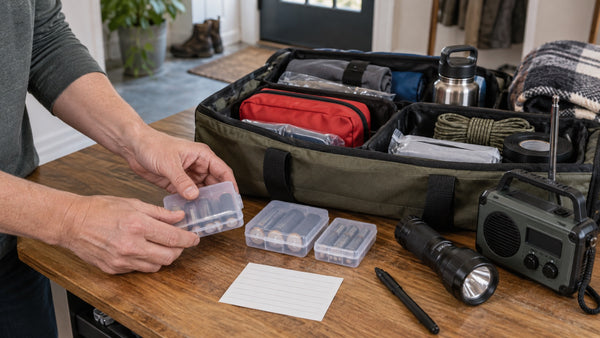
- Put gloves on top. Gloves come out first, so store them where you can reach them without unpacking anything else.
- Group by job. Keep bandages and gauze in one section, cleaning supplies (wipes, ointment) in another, and tools (tweezers, tape) in a third.
- Use the loops and sleeves. Elastic loops hold tape rolls and tweezers upright. Flat sleeves keep gauze pads and wipe packets from sliding to the bottom.
- Keep the flat items flat. A folded emergency blanket and the instruction card fit well against the back panel.
- Leave a little space. An overstuffed pouch is hard to close and harder to search in a hurry.
Keep it current
The Red Cross recommends checking your kit regularly, checking expiration dates and replacing anything used or out of date. An easy habit is to open the pouch whenever you restock it after use, and again at set times during the year, such as when the clocks change.
- Replace anything you used, right away.
- Check dates on ointments, wipes and any medications.
- Make sure the gloves are still intact and the wrappers are sealed.
- Update your emergency contact card if anything has changed.
Where to carry it
A compact pouch works in a backpack, a vehicle or a work bag. Pick one consistent spot and tell the people you travel with where it is, so anyone can find it. For more on what else to carry day to day, see our EDC essentials for beginners.
A pouch and a few supplies do not replace training. Consider taking a first aid course so you know how to use what you carry.
The TacPack EDC Bag is a compact pouch with multiple compartments that can be set up as a first aid kit, available in four colors.
See the TacPack EDC Bag →Was this dispatch helpful?
Thanks for the feedback.

BattleGear™ 132-in-1 Precision Screwdriver Set - Tactical Repair Tool Kit with Magnetic Bits
132 Bits. One Tool. Zero Excuses When Your Gear Needs Fixing. When you're fixing electronics, eyewear, gear or somet...