
Vehicle Emergency Kit Checklist: What to Keep in Your Car for Every Scenario
Your truck is your first line of defense — make sure it's stocked. Here's the complete vehicle emergency kit checklist every driver needs.

In This Dispatch
Your vehicle is more than a way to get from point A to point B — it's a mobile survival platform. Whether you're commuting on an empty stomach, driving through a winter storm, or caught in a rural area miles from help, the gear inside your car determines whether a bad situation becomes a disaster.
A well-stocked vehicle emergency kit checklist covers you for breakdowns, weather events, accidents, and the kind of unplanned overnighters that turn a 30-minute drive into an overnight stay. This guide walks through every category you need, with tactical-grade recommendations for the items that actually work when everything else fails.
If you're building your kit from scratch or upgrading what you already keep in the trunk, this is the checklist to follow.
The Foundation: Why Your Car Needs Its Own Emergency Kit
Most people keep a flashlight and a phone charger in their car. That's not a kit — that's a hope and a prayer. A real vehicle survival kit accounts for scenarios that disable the car itself: a dead battery, a flat tire, an accident that traps you inside, or a storm that makes driving impossible.
The goal is simple: sustain yourself and your passengers for a minimum of 24 hours while waiting for help, or long enough to walk to assistance if the vehicle is disabled beyond repair.
- Weather events — winter storms strand drivers for hours or days; a kit with thermal protection and food reserves can be the difference between mild discomfort and a genuine medical emergency
- Breakdowns in remote areas — rural highways and unpaved routes can be 30+ miles from the nearest gas station or cell coverage
- Accidents — a vehicle collision can trap occupants, damage or spill fuel, and require immediate first aid response before EMS arrives
- Civil unrest or natural disaster — grid-down scenarios can make roads impassable or necessitate rapid evacuation on foot
First Aid — The Non-Negotiable Core
Any kit without a solid first aid component is incomplete. In a vehicle context, you're dealing with injuries that happen at speed or in rough terrain — lacerations from debris, burns from hot components, impact injuries from collision, and penetrating wounds from shattered glass.
MARCH Protocol for Vehicle Kits
Train yourself on the MARCH sequence — it's the standard for tactical and wilderness medicine:
- M — Massive hemorrhage: CAT Tourniquet for severe bleeds on extremities
- A — Airway: nasopharyngeal airway (NPA) if you're trained to use one
- R — Respiration: chest seal for penetrating chest injuries
- C — Circulation: pressure bandages, hemostatic gauze
- H — Hypothermia: thermal blanket, warm fluids
For a vehicle kit, the essentials are:
- CAT Tourniquet (Gen 7) — proven effective, one-handed application for self or buddy
- Israeli emergency bandage (4-inch and 6-inch)
- Chest seal (HALO or Bolin-style vented)
- Nitrile gloves (minimum 2 pairs)
- Trauma shears (capable of cutting seatbelt webbing)
- Marker for noting time of tourniquet application
- Emergency thermal blanket (mylar)
The Recon24 Survival Kit includes many of these components in a compact MOLLE-compatible case that mounts directly to your vehicle's cargo system or tucks behind a seat. Supplement it with a standalone CAT Tourniquet for redundancy.
Tools — Getting the Car Running or Getting Out
Your tool selection needs to solve two problems: keeping the vehicle mobile, and enabling you to exit the vehicle safely if it cannot be driven.
Essential Automotive Tools
- Jump starter/battery pack — lithium power bank with jumper cables. A dead battery is the most common roadside breakdown. A self-contained jump pack eliminates the need for a Good Samaritan with cables.
- Multitool or folding knife — the BattleGear 132-in-1 Screwdriver handles bolt-facing tasks from scope mounts to battery terminals. A quality folding knife covers cutting jobs.
- Tire repair kit — plug kit, 12V inflator, and tire pressure gauge. If you run stock spare tires (not run-flats), you need this.
- Basic wrench set — Metric and SAE, 8mm through 19mm, covering common automotive hardware
- Duct tape — temporary repair of hoses, trim, interior components, even splinting materials
- Zipties — heavy-duty (mil-spec) for temporary repairs, securing loose components, or improvised restraint
Exits and Entrances: Window/Belt Cutting
If an accident pins you inside or submerges the vehicle, standard tools won't cut it. Keep a window breaker and seatbelt cutter within reach — not buried in the kit under everything else. Many tactical multi-tools include a carbide window breaker tip and a seatbelt cutter notch.
A fixed-blade knife in the door panel or center console is the fastest access in a submerged-vehicle scenario. Seconds count.
Fluids and Fuel — Energy and Hydration
Your body can survive weeks without food but only days without water. In a vehicle, water is heavy — a gallon per person per day is the absolute minimum — so prioritize it accordingly.
- Water — minimum 1 gallon per person, 3 gallons per vehicle for extended scenarios
- Electrolyte packets — hydration salts replace what you lose sweating; critical in summer heat
- Non-perishable food — energy bars, jerky, nuts. High-calorie, high-protein. No chocolate (melts). Replace every 6 months.
- Small stove + fuel — for cold-weather scenarios, a butane stove or trioxane tabs provide hot water for rehydrating food and warming hands
- Jumper cables — no-exception. Minimum 10-gauge, 16-foot length. Keep in the trunk, not the glovebox.
Shelter and Warmth — Surviving the Night
Vehicle breakdowns often happen in conditions where hypothermia is a real risk — night, rain, cold. Your shelter system needs to insulate you from the ground, the air, and wind.
- Thermal blanket (mylar) — lightweight, compact, 80% heat loss prevention. Every kit needs at least 2.
- Ripstop tarp — groundsheet, rain shelter, or improvised sunshade. 6x8 feet minimum.
- Rain poncho — keep one per occupant. More compact than a full jacket for stowed kits.
- Hand warmers — zip-lock bag of chemical hand warmers. 6-10 pack.
- Warm beanie / balaclava — synthetic or wool. Stuffing a wool hat in a sealed bag keeps it dry.
- Space blanket + sleeping bag liner — for temps below 40°F, a full sleeping bag or quilt adds critical warmth.
Lighting and Signaling — Being Found
A breakdown on a dark rural road is one of the most dangerous situations you can face. You need to see your surroundings AND be seen by other drivers or rescue personnel.
- Headlamp — hands-free is non-negotiable for working under a hood or changing a tire. 200+ lumens with red-light mode for preserving night vision.
- Flashlight — handheld 1000+lumen torch with strobe function for signaling
- Chemlights — 4-pack minimum. Green and red for marking your vehicle position at night
- Road flares — DOT-approved reflective triangles + LED road flares. Place 100 yards from vehicle approaching traffic
- Whistle — low-tech but effective for signaling over long distances (3 blasts = help)
- Orange warning triangles — standard highway safety equipment in most states
Communication and Navigation
Cell service is unreliable in remote areas. Have a backup plan.
- Portable power bank — 20,000mAh+ with USB-C PD for charging phones and GPS devices. Recharge via 12V socket or solar panel.
- Paper map — local atlas or topographic map of your region. GPS fails; paper doesn't.
- Satellite communicator — Garmin inReach or similar. Two-way text communication from anywhere on Earth. Worth the subscription cost if you regularly travel off-grid.
- Notepad + pencil — for leaving notes if you leave the vehicle, marking your direction of travel for rescuers
Security — Self-Defense and Offense
Civil unrest scenarios, natural disasters, and even normal roadside stops can present personal security risks. Plan accordingly.
- Concealed carry firearm — if legally permitted and you carry daily, your vehicle kit should include a means to access it quickly from the driver's seat. The QuickDraw Gun Mount provides rapid access mounting under a seat or in a center console.
- Concealed carry holster — outside the vehicle, a comfortable AIWB or shoulder rig keeps your sidearm accessible without printing.
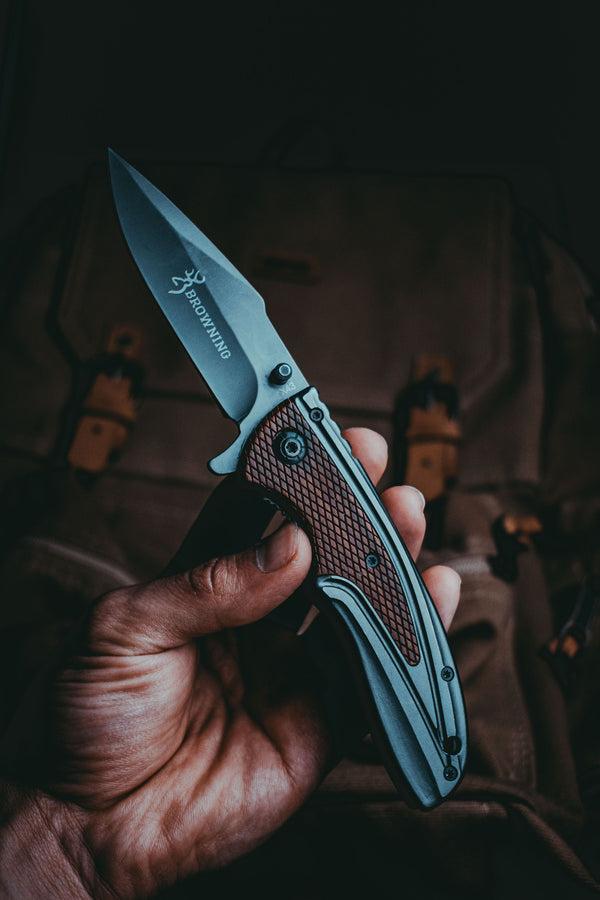
- Tactical knife — fixed blade for utility and defensive use. Folding knife as backup.
- Bright flashlight with strobe — a 1000+lumen strobing beam is disorienting at night and draws attention in an emergency.
Documents — What to Keep in the Vehicle
Certain documents should always be in your car — they speed up rescue, prove insurance coverage, and may be required at checkpoints.
- Insurance card — current, with agent contact info
- Vehicle registration — copy, not necessarily original
- Emergency contact list — blood type, allergies, medications, physician contact, emergency contacts
- Medical directive / POLST form — if applicable
- Photo ID — driver's license
Recovery Gear — Getting Unstuck
If you drive on unpaved roads, snow, or mud, recovery gear becomes essential rather than optional.
- Tow strap — minimum 20-foot, 20,000 lb rated. Soft shackles prevent metal-to-metal failure.
- Portable shovel — collapsible entrenching tool or dedicated tactical shovel
- Sand/mud traction boards — traction mats for stuck tires
- Hi-lift jack — for tire changes on soft or uneven ground
- Jack base plate — distributes load on soft surfaces
Building Your Vehicle Emergency Kit: Where to Start
If you're starting from zero, build your kit in priority order: first aid and bleeding control, then shelter and warmth, then tools, then the rest. The Recon24 Survival Kit provides a solid foundation in first aid, shelter, and sustenance — everything else adds on top of that platform.
For a compact vehicle kit in a sedan with limited trunk space, the GO-Bag Tactical Sling works as a grab-and-go survival pack that can be taken on foot if you need to leave the vehicle.
Store your kit in a hard-case or heavy-duty duffle — soft bags tear and allow contents to shift. Secure it so it doesn't become a projectile in a collision.
Check and rotate contents every 6 months: swap expired food, test batteries, check tire inflator operation, replace used medical consumables.
Frequently Asked Questions
What is the most important item in a vehicle emergency kit?
A CAT Tourniquet is the single most critical item. Severe hemorrhage from an accident or injury can kill within minutes — a tourniquet buys time that nothing else can replace. Every other item in your kit is secondary to controlling life-threatening bleeding first.
How much water should I keep in my car emergency kit?
Minimum 1 gallon per person, 3 gallons per vehicle. In summer heat or high-altitude environments, double that amount. Water is the heaviest single item in most kits — prioritize it accordingly and accept that you may need to carry less of something else to accommodate it.
What should a car emergency kit include for winter driving?
Winter adds: thermal sleeping bag or quilt, chemical hand warmers (8-10 pack), wool hat, balaclava, ripstop tarp for groundsheet and shelter, collapsible snow shovel, traction mats or sandbags, jumper cables with heavy-gauge wiring, and a butane stove with fuel. Hypothermia is the primary winter driving risk — your kit's shelter system needs to be robust enough to keep you warm through a night in sub-freezing temperatures.
How often should I check and rotate my vehicle emergency kit?
Inspect and rotate every 6 months — set a calendar reminder. Check batteries in flashlights and tire inflators, replace expired food bars, inspect medical supplies for opened or used items, and verify that clothing still fits if you've gained or lost weight. A kit that hasn't been checked in 2 years is likely a kit that fails when you need it.
Related Gear & Guides
- Bug-Out Bag Checklist: Build a 72-Hour Kit That Works
- How to Choose a Plate Carrier: Sizing, Weight, and Modular Setup
- Shop Survival Gear
20% off Emergency & Survival Gear
Use code EDGE20 at checkout · Free U.S. shipping
Shop Survival GearWas this dispatch helpful?
Thanks for the feedback.

AR Folding Stock Adapter™ – Compact, Tactical Upgrade for Easy Storage & Transport
Fold It. Stow It. Stay Ready. When every inch matters — whether you're packing a tight gear bag, storing your setup ...