

I Thought We Had Plenty of Food. Then the Roads Closed and I Actually Counted.
Four days snowed in taught me the difference between a full-looking pantry and a food reserve. Here’s what I changed afterward.
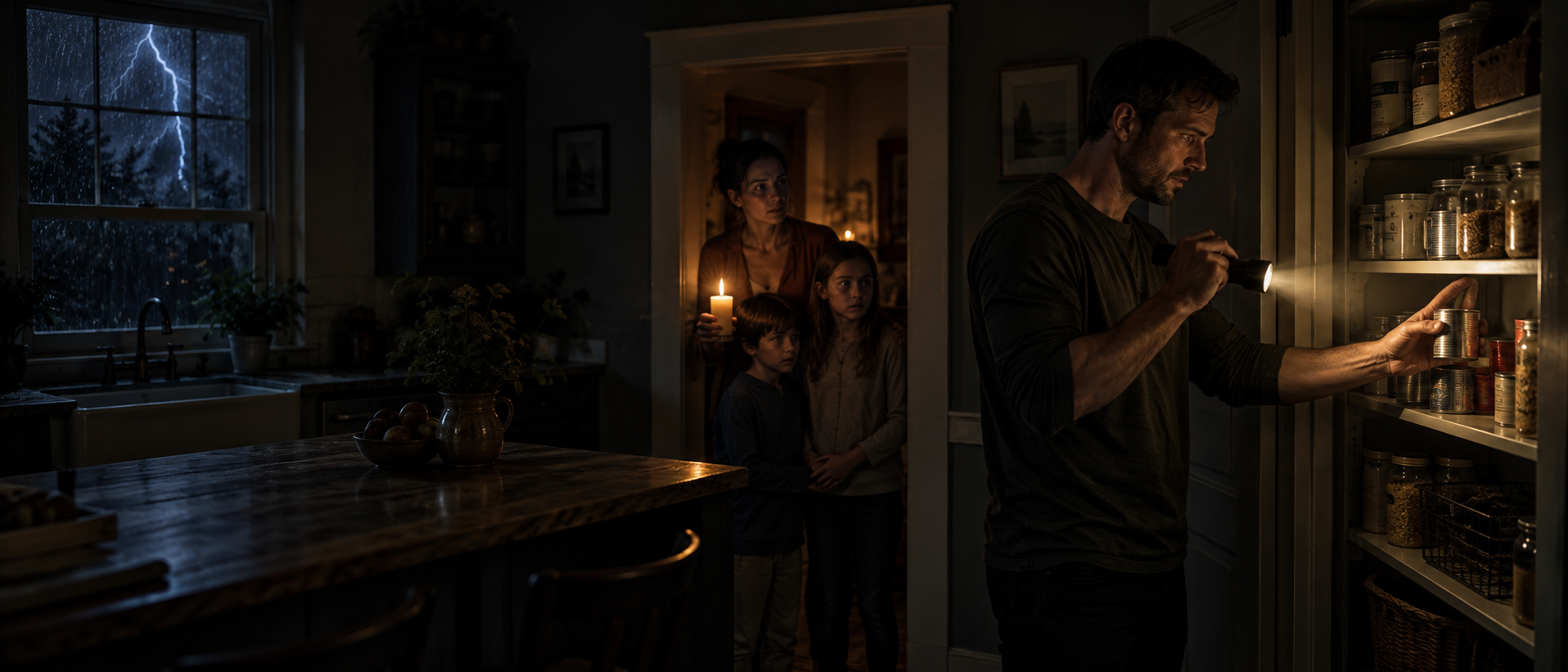
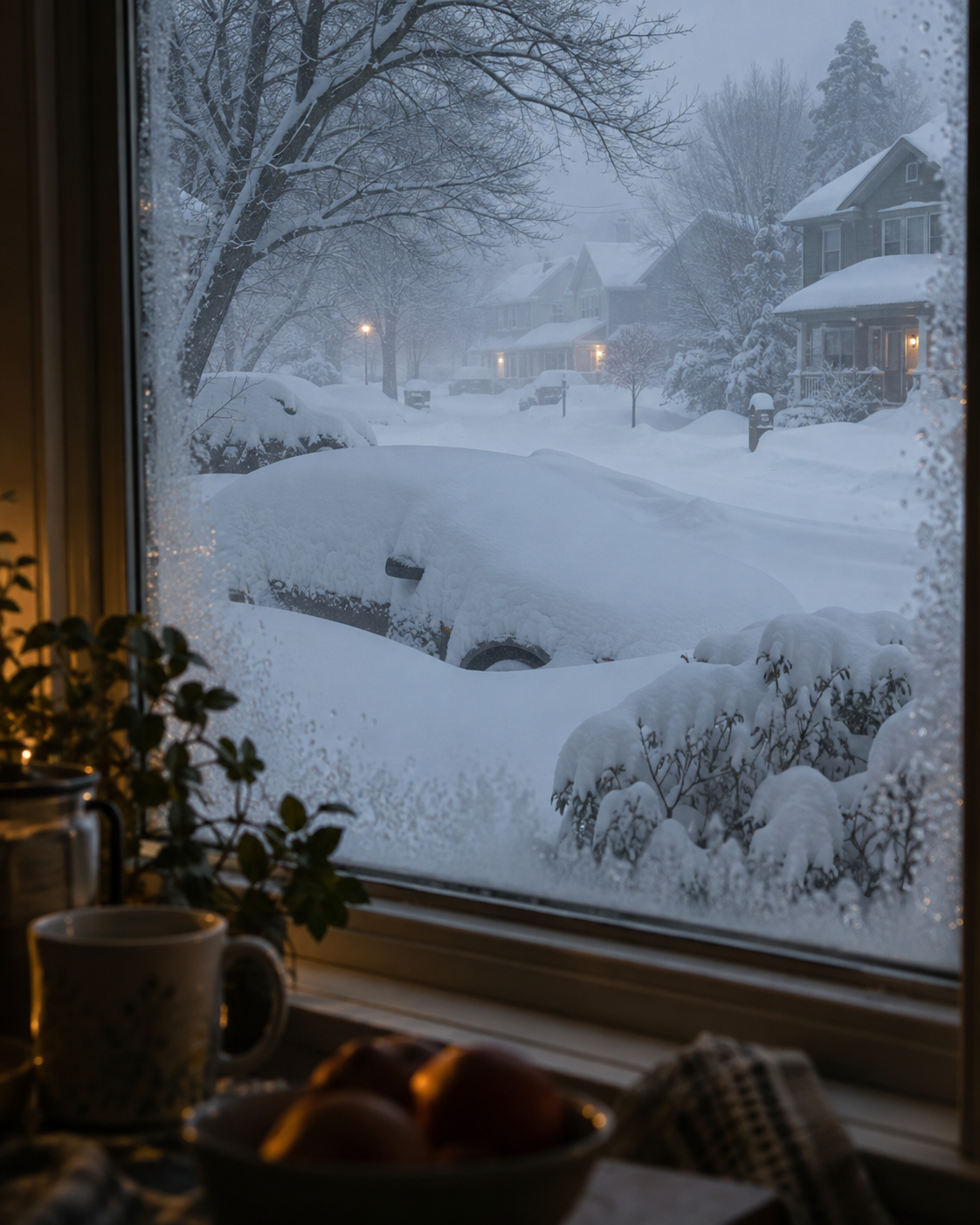
The storm was supposed to be a day, maybe two. By the second night the power was out, the plows hadn’t come, and the road at the end of our street had disappeared under a drift.
My wife asked a simple question over dinner: “How long can we go before we need the store?”
I said a couple of weeks, easy. We had a full pantry. I’d been buying extra for months.
Then I went and actually counted.
A full pantry isn’t the same as a reserve
It looked like a lot. It wasn’t. Half of it was snacks. A lot of it needed a working stove or a fridge. There were three bags of pasta and almost no sauce, and a case of something none of us actually eat.
And in the back, behind the stuff we use every week, there were cans I didn’t remember buying.
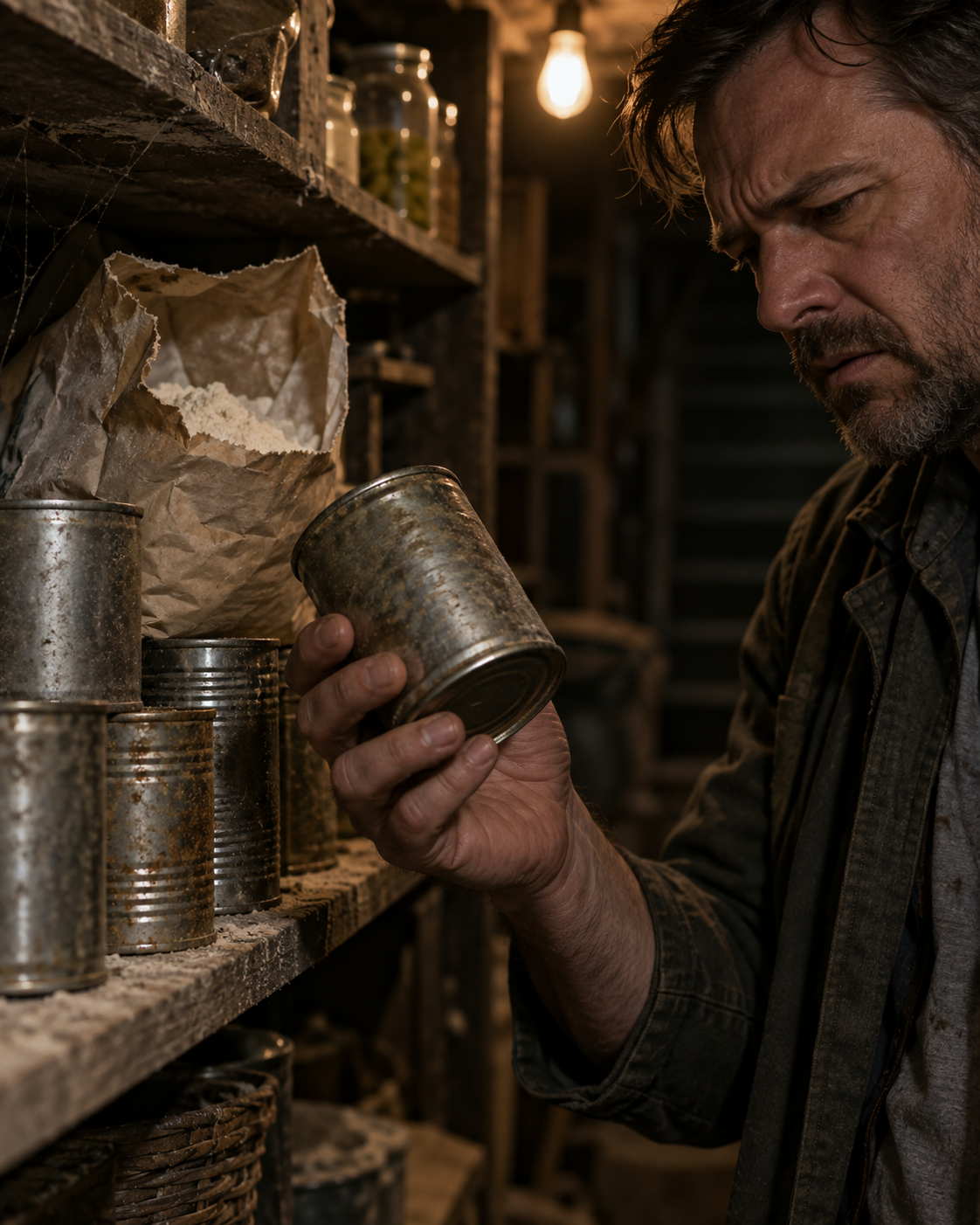
Some of those were long past their dates. The “extra” I’d been buying had been going straight to the back of the shelf and staying there.
When I did the math on what we could actually cook and eat, it wasn’t two weeks. It was closer to five days.
“I’d been buying food for months. I’d never once checked what we actually had.”
The roads opened on day four
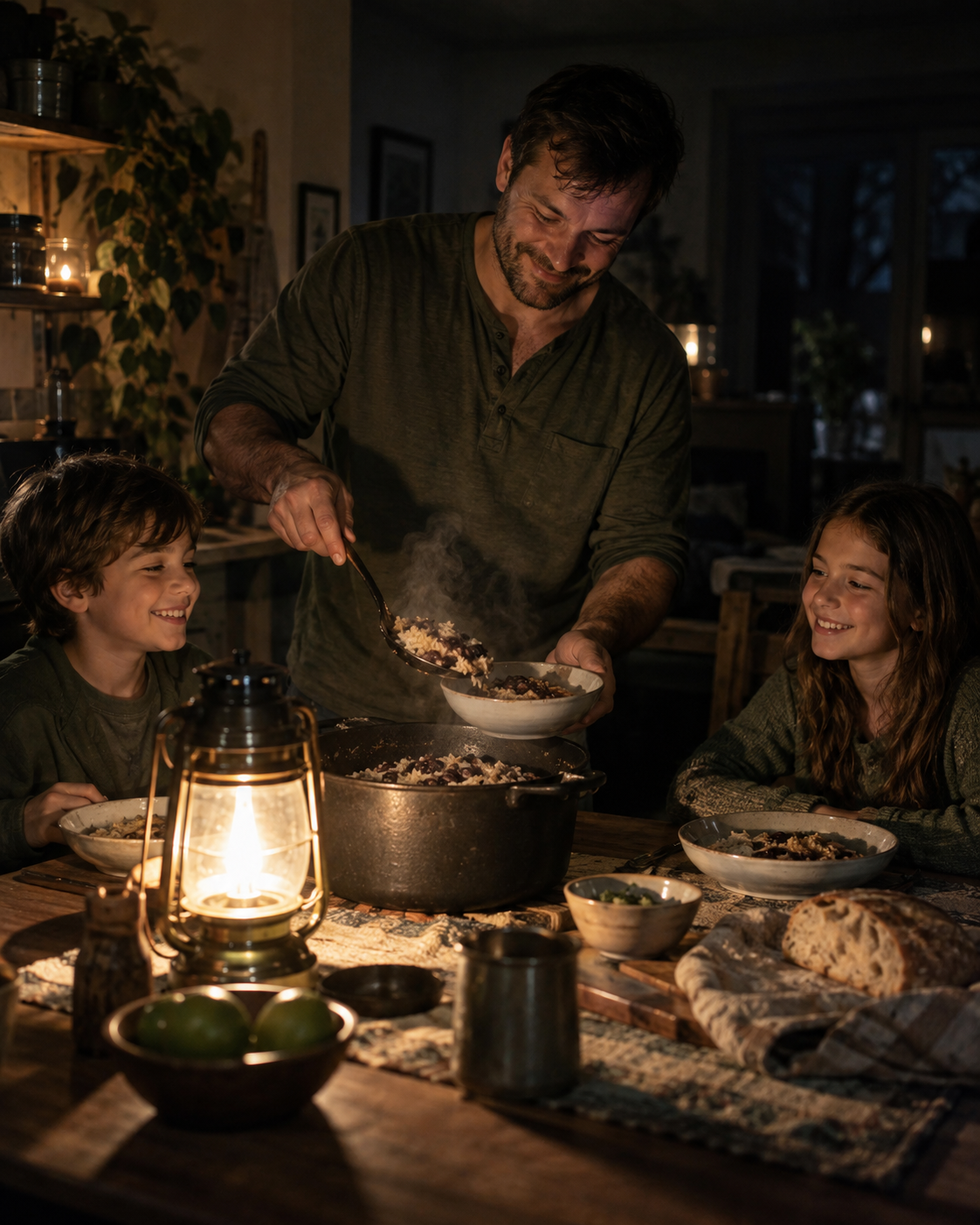
We were fine. We ate a lot of rice and beans by lantern light, and the kids thought it was an adventure.
But I kept thinking about what would have happened if it had been a week, or if the stores had been empty when the roads reopened. I didn’t have a reserve. I had a pile.
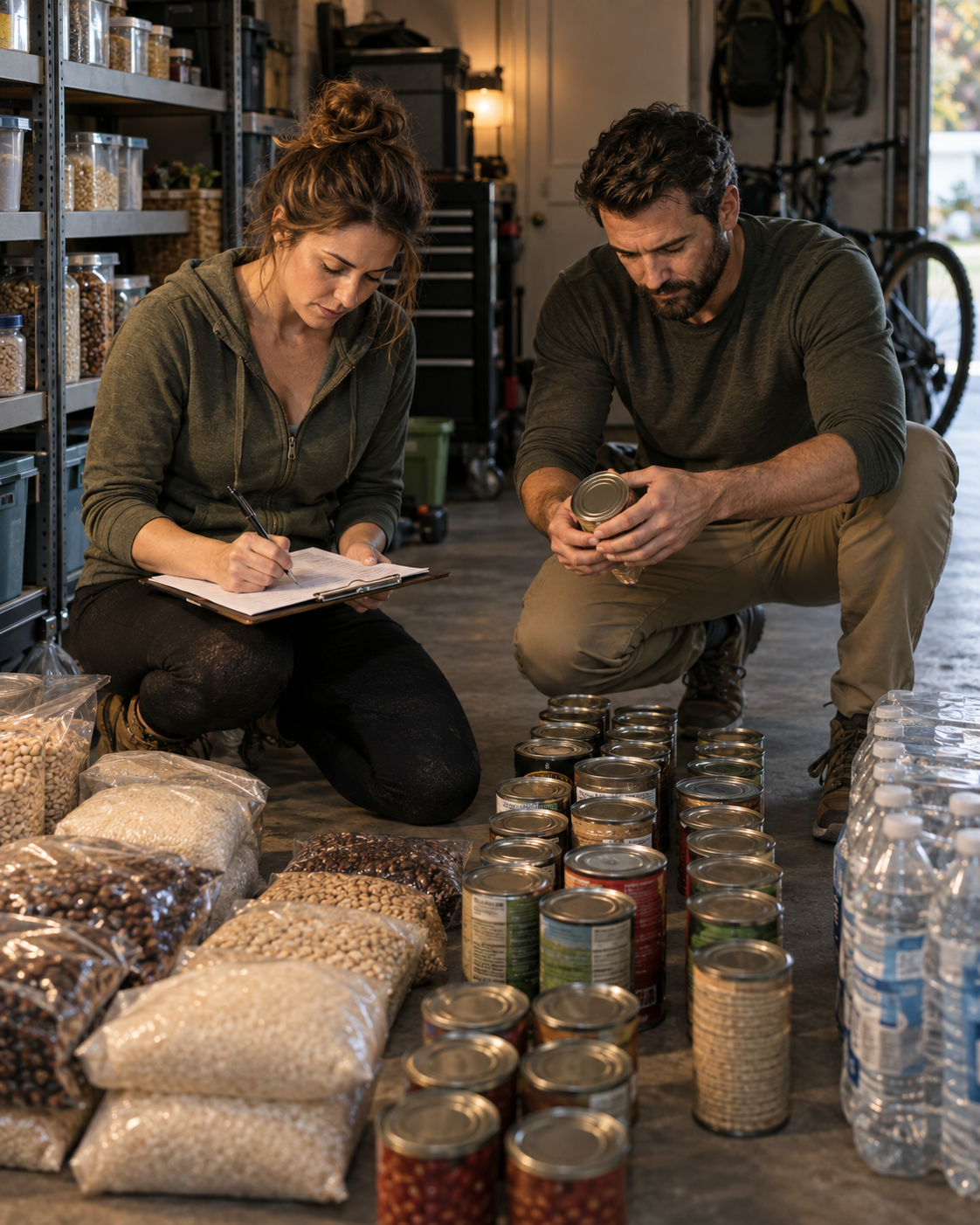
One Saturday in the garage
I didn’t want to become a doomsday prepper, and I didn’t want to spend a fortune. I wanted a system: something that told me what we had, what we were missing, and how to keep it from expiring.
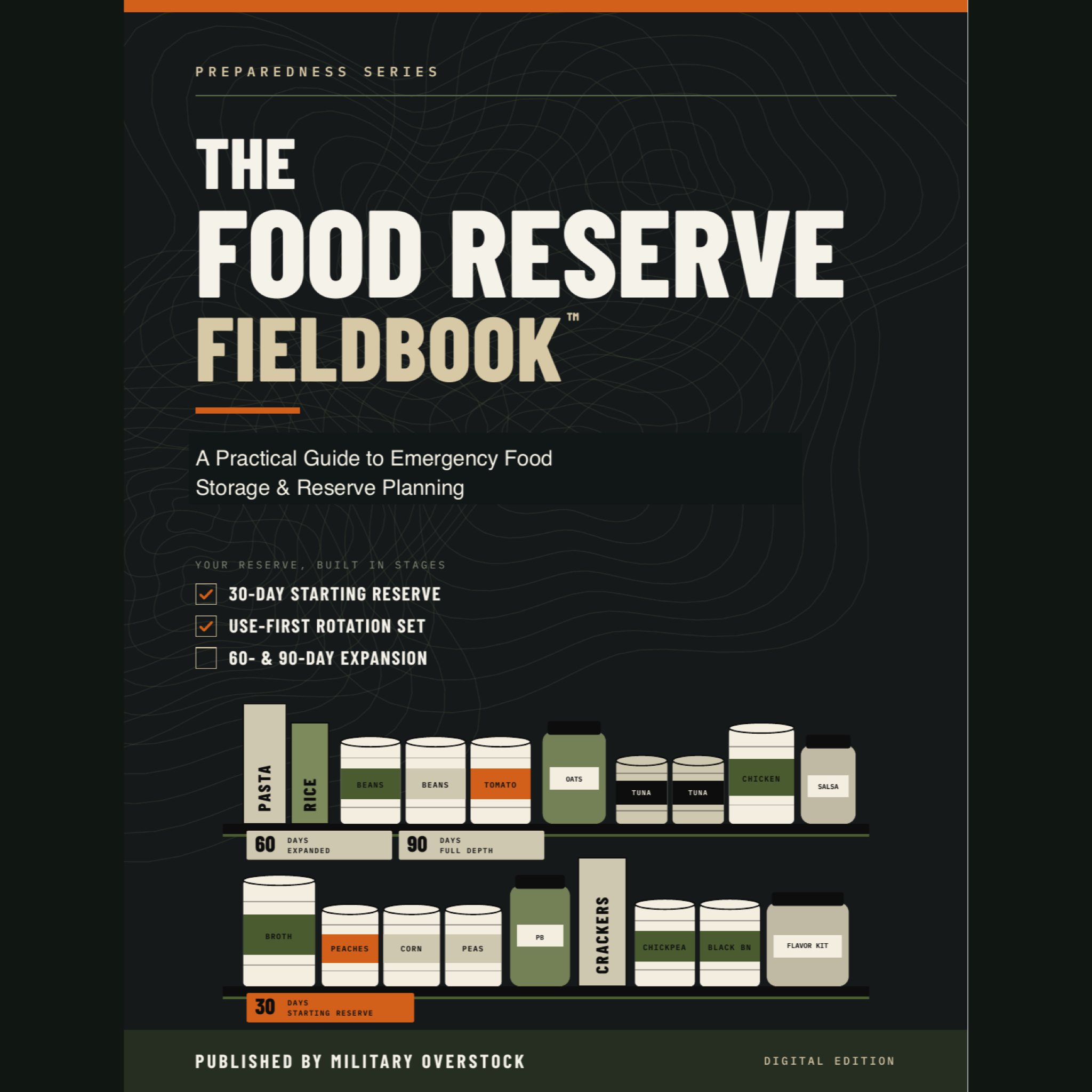
That’s what I found in The Food Reserve Fieldbook. It’s a 90-page printable PDF. The next Saturday my wife and I pulled everything out and worked through it together:
- 1We did a real inventory. Everything on the floor, counted and written down on the inventory pages. That gave us an honest baseline.
- 2We set a 30-day target first. Built around staples we actually eat, not a pile of things we’d never open.
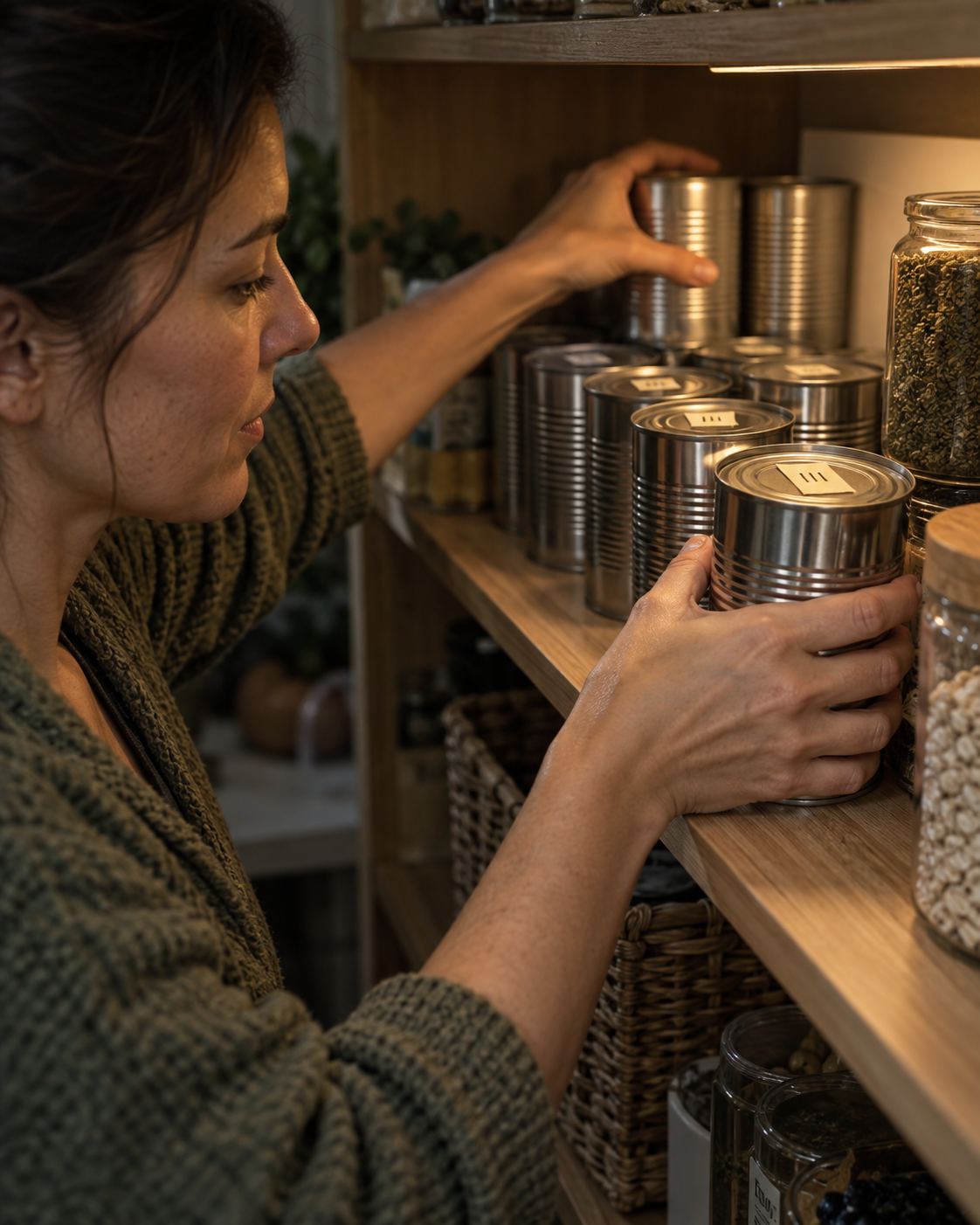
- 3We started rotating. New stock goes to the back, older stock comes forward, and the dates are written where we can see them.
What’s different now
We hit our 30-day baseline a few months later, one normal grocery trip at a time. We’re working toward 60 now. Nothing in the pantry is a mystery anymore, and nothing gets forgotten at the back.
If the roads close again this winter, I won’t have to guess. I’ll already know how many days we have.
- Reserve baseline, inventory, and rotation tools
- Food-storage guidance and printable tracking pages
- 30-, 60-, and 90-day scaling frameworks
- Focused food-allocation planning for sheltering in place or leaving
The rotation examples made it much easier to organize shelves without turning food storage into a giant project.
The planning pages helped me see what to buy gradually and what we already use every week.
I appreciated the simple inventory prompts. They gave me a calmer way to build a reserve over time.
One afternoon to find out what you really have. Then build from there, one trip at a time.
Start my food reserve →