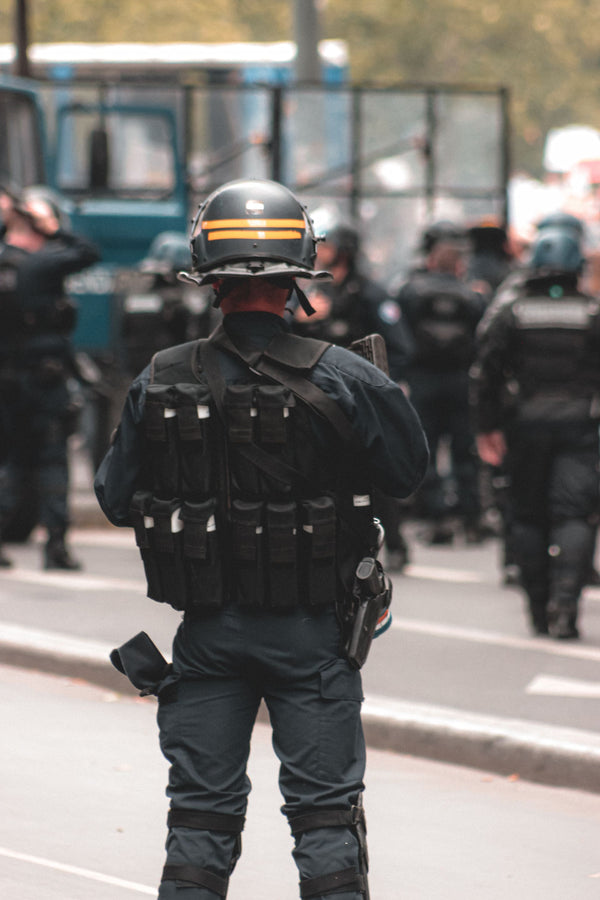

Evolution of Camouflage: Unraveling the Threads of Military Uniform History
When delving into the realm of combat uniforms, the U.S. Military follows strict protocols rooted in functionality, extensive research, and a tapestry of historical colors. The iconic camouflage patterns...

In This Dispatch
When delving into the realm of combat uniforms, the U.S. Military follows strict protocols rooted in functionality, extensive research, and a tapestry of historical colors. The iconic camouflage patterns synonymous with military attire have undergone a fascinating metamorphosis over the years.
Draped in history, military uniforms have long been a canvas of expression for various branches. In this exploration, we unveil the intricate evolution of camouflage, offering insights to inform your choices when procuring military-grade equipment.
OG 107: Original OD
Between 1952 and 1989, the United States armed forces donned OG 107 uniforms. Originating from the mustard brown attire of World War II, these utility-style uniforms boasted a specific shade of olive green (107 or 507). Constructed from thick cotton, soldiers often tucked in the shirt, belted it with a black fabric belt, and adapted sleeves to combat conditions. The transition to OG 507, a polyester-cotton blend, aimed to enhance color retention amidst varied battle elements.
ERDL: Traditional Leaf Patterns
The leafy camouflage pattern, introduced in 1967, was conceptualized by the U.S. Army's Engineer Research and Development Laboratories (ERDL). Reflecting foliage, soldiers could opt for lowland or highland ERDL patterns, aligning with their deployment terrain—dark for forests, light for lush environments.
BDU Woodland Attire
The Battle Dress Uniform (BDU), born in 1981, revolutionized military wear. With variations like desert and woodland camo, BDUs were designed for both functionality and concealment in forested landscapes. The six-color desert pattern, known as "chocolate chip" camo, emerged during the Persian Gulf War, while the three-color desert pattern offered a contemporary alternative.
Digi Camouflage
In the digital age, Digi camouflage emerged, crafted on computers to thwart satellite imaging. Though versatile across environments, it proved moderately effective in blending seamlessly.
ACU: Army Combat Uniform
Replacing BDUs in 2008, the Army Combat Uniform (ACU) prioritized functionality with a pixelated pattern, concealing troop activities from satellites. Multicam, distinct from OCP, became the standard for the Army, Air Force, and Space Force.
Multicam vs. OCP
Multicam, characterized by twiglets, differs from Operational Camouflage Pattern (OCP), boasting linear horizontal patterns. Currently donned by Army, Air Force, and Space Force members, OCP uniforms ensure cohesion and effectiveness.
USN: United States Navy
The Navy transitioned from traditional blue uniforms to more comfortable, fire-resistant outfits in 2010. Adopting a digi print resembling "blueberries," the Navy further evolved in 2019 with the USN Type III, featuring a multicam color scheme.
USAF: United States Air Force
Air Force's journey from the Digital Tiger Stripe of the Airman Battle Uniform (ABU) to the OCP uniform in 2018 marked a significant shift. Ground security forces and special units continue to don camo for operational readiness.
Conclusion
As we unveil the layers of military uniform history, the diverse camo landscape mirrors the adaptability and resilience of our armed forces. For your military-grade needs, embark on a journey with Army Navy Outdoors and explore our online store today. Witness the legacy of camouflage unfold in every stitch and pattern, embodying the spirit of service and evolution.
Was this dispatch helpful?
Thanks for the feedback.

AR Folding Stock Adapter™ – Compact, Tactical Upgrade for Easy Storage & Transport
Fold It. Stow It. Stay Ready. When every inch matters — whether you're packing a tight gear bag, storing your setup ...