
EDC Gear Essentials: What Every Operator and Everyday Citizen Should Carry
The gear that actually earns its weight when rounds start flying — and when they don't.

In This Dispatch
Every serious shooter, prepper, and trained professional knows the value of carrying the same tools day in and day out — not out of paranoia, but out of discipline. EDC gear essentials are the items that live on your person or in your immediate reach, ready to bridge the gap between ordinary and prepared when circumstances shift fast.
If you walk out the door without a flashlight, a blade, a way to stop bleeding, and a way to fix what's broken, you're accepting risk you don't have to accept. The good news: building a functional everyday carry kit doesn't require a big budget. It requires intentionality.
What Is EDC — And Why Does It Matter?
EDC stands for Everyday Carry — the collection of tools and gear you bring with you consistently, not just on range days or deployments. For tactical professionals and informed civilians alike, EDC means having survival and problem-solving capability on your body or within arm's reach at all times.
The logic is simple: critical moments don't schedule appointments. A blade becomes necessary when seatbelt cutter becomes unavailable. A tourniquet matters before EMS arrives. A flashlight illuminates a darkened stairwell on an otherwise routine night out. EDC gear essentials are the layer between you and the gap between what you need and what you have.
Your loadout doesn't need to be heavy. It needs to be complete.
The Core EDC Categories: Five Things Every Carry Should Include
A functional EDC setup covers five bases: cutting, lighting, bleeding control, repair capability, and situational awareness. Below is a breakdown of each, with guidance on what to prioritize based on your environment and threat profile.
1. Cutting Tool — The Foundation of EDC
A quality folding knife or fixed blade is the single most universal tool in any EDC setup. It handles package opened, seatbelt cut, zip-tie removed, rope trimmed, and self-defense contingencies. Look for a blade made from corrosion-resistant steel (S30V or similar), a frame lock or liner lock mechanism, and a carry profile that works for your daily environment.
If you're carrying inside the waistband or in an office environment, a slim, deep-carry folder keeps profiles low and capability high. For outdoor or field use, a fixed-blade with a glass-reinforced handle holds up to harder use.
2. Illumination — Light Changes Everything
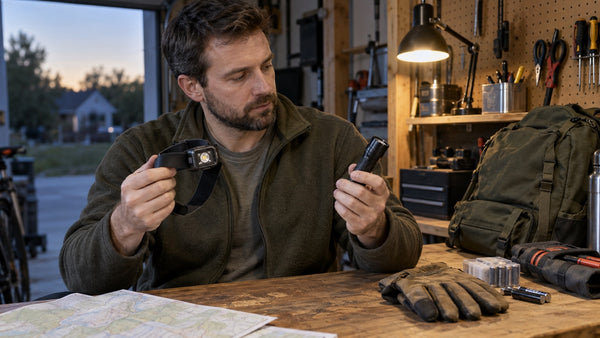
Your ability to navigate, identify, and respond depends heavily on whether you can see — and whether you can blind an aggressor before they get a visual on you. A tactical flashlight in the 200–600 lumen range covers both everyday use and low-light defensive scenarios.
Look for a flashlight with a pocket clip or body mount for retention, a momentary-on tail cap, and at minimum IPX4 water resistance. USB rechargeability is standard now — no reason to run disposable batteries for your primary light.
3. Bleeding Control — The Most Time-Sensitive EDC Category
Traumatic bleeding kills fast. A quality tourniquet and a pressure bandage in your EDC kit can be the difference between surviving an injury and bleeding out before help arrives. The MARCH protocol (Massive hemorrhage, Airway, Respiration, Circulation, Head/Hypothermia) prioritizes bleeding control first — your EDC setup should reflect that priority.
Carry a CAT Gen 7 or equivalent windlass tourniquet in an accessible pocket — not buried in the bottom of a bag. Pair it with a compressed gauze or Israeli bandage for smaller bleeds and wound packing. If you carry a firearm for defense, bleeding control is not optional: it's mandatory.
BattleGear™ 132-in-1 Precision Screwdriver Set
Every EDC kit needs a repair tool that handles everything from optics mounts to phone screens. The BattleGear 132-in-1 screwdriver set fits in a range bag or vehicle kit and handles precision pin drives, Torx for optics, and flat heads for general duty.
Shop Now — Free Shipping4. Repair and Maintenance Tools
Things break. Fastenings loosen. Batteries die. A compact, multi-bit screwdriver or precision tool handles the small fixes that would otherwise strand you — or leave your gear non-functional when you need it most. From adjusting an optic mount to fixing a loose screw on your rifle, a precision tool kit in your EDC rotation pays dividends every time something goes wrong at the worst moment.
The BattleGear 132-in-1 Precision Screwdriver Set covers the bits you actually need — Torx for optics, Pentalobe for electronics, flat heads for general field repair — in a compact package that fits in any bag or vehicle console. It's the tool you didn't know you needed until the moment you reach for it.
5. Carry System — How You Transport Your EDC
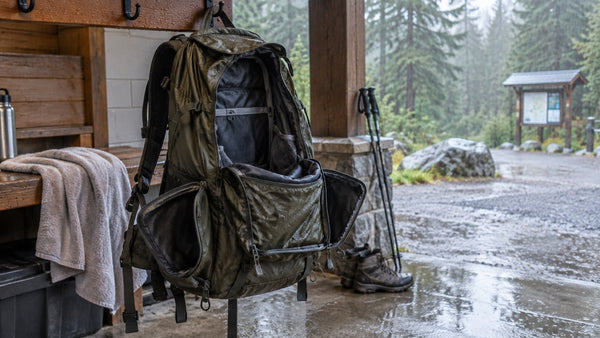
EDC tools only help if they're on you when things go sideways. A dedicated carry system — whether a sling pack, fanny pack, or dedicated EDC bag — keeps your gear accessible, organized, and ready.
The GO-Bag Tactical Sling Backpack is purpose-built for the EDC role: low-profile enough for everyday carry, structured enough to hold a full kit, and MOLLE-compatible for attaching additional pouches as your setup grows. It rides tight against your back, distributes weight evenly, and keeps your essential items in the top compartment for fast access.
GO-Bag™ Tactical Sling Backpack
Compact, MOLLE-compatible, and built for fast access — the GO-Bag sling is the foundation of a smart EDC carry system. Fits a full trauma kit, tools, hydration, and daily essentials without looking Tactical™ at the office.
Shop Now — Free ShippingHow to Build Your EDC on a Budget
You don't need to drop $500 on day one. Start with the categories that address your highest-probability threat scenario — most people are far more likely to need bleeding control or a light in a parking garage than a fixed-blade fighting knife. Build in this order:
- Light first. A flashlight is universally useful and has no legal baggage. Start here.
- Bleeding control. A tourniquet and compressed gauze cover the most time-sensitive threat. Non-negotiable if you carry a firearm.
- Cutting tool. A quality folder covers 90% of cut tasks. Add a fixed blade if your environment warrants it.
- Repair tool. A compact screwdriver set handles the small fixes that come up on a range day or in a vehicle.
- Carry system. Once your core items are identified, get a dedicated bag or pack that keeps them accessible and organized.
Each addition makes your setup more complete. The goal is a kit that works for you every day — not a display that looks impressive on Instagram.
EDC Principles: More Than Gear
Carrying the right tools matters. But the mindset behind EDC matters more. A few principles that separate effective everyday carry from mere accumulation:
- Rotate and maintain. Batteries die. Blades dull. Tourniquets degrade under prolonged UV exposure. Inspect and rotate your gear quarterly.
- Train with what you carry. If you carry a knife, practice drawing and deploying it under stress. If you carry a tourniquet, apply it one-handed on yourself. Familiarity under pressure is what makes gear effective.
- Know your carry laws. Every state has different regulations on blade length, concealed carry of tools, and what constitutes a weapon. Run your setup through local statutes before you build around it.
- Carry consistently. An EDC item buried in a drawer at home serves no one. The best gear is the gear you actually have on you.
Frequently Asked Questions
What are the most essential EDC items for beginners?
Start with a quality flashlight, a folding knife, a tourniquet, and a compact tool or multi-bit screwdriver. These four categories cover lighting, cutting, bleeding control, and field repair — the foundations of any functional EDC kit. Add a carry system (sling pack or EDC bag) to keep everything accessible and organized.
Is it legal to carry EDC tools like knives and flashlights?
Laws vary by state and municipality. Most jurisdictions allow folding knives under a certain blade length for everyday carry. Tactical flashlights have no legal restrictions in most areas. Before building your EDC kit, familiarize yourself with local statutes — especially if you travel between jurisdictions with different regulations.
How much should I budget for a complete EDC kit?
A functional EDC kit can be built for under $150 if you prioritize correctly. A quality flashlight ($30–60), a tourniquet ($25–40), a folding knife ($30–60), and a compact tool kit ($20–40) cover the essentials. Add a carry system like a tactical sling pack ($40–70) and you have a complete, capable setup. Quality matters more than quantity — one well-made tool outperforms five cheap ones every time.
Should I carry EDC gear every day or just when I'm going to the range?
The point of everyday carry is that threats don't announce themselves. An incident in a parking garage, a roadside emergency, or an unexpected encounter happens on ordinary days — not just range days. Carry your EDC consistently, not selectively. The tool you leave behind is the one you'll wish you had.
Related Gear & Guides
- Best Tactical Backpack 2026: Complete Buyer's Guide
- Plate Carrier Buyer's Guide — Full Modular System Breakdown
- Shop GO-Bag Tactical Sling Backpack
- Shop BattleGear 132-in-1 Precision Screwdriver Set
- Shop All EDC Gear
Editor's Note (Updated on April 27, 2026): Military Overstock has confirmed a limited surplus batch of GO-Bag Tactical Sling and BattleGear 132-in-1 Screwdriver Sets with a 20% discount. Due to recent demand and positive coverage, this offer is available on a first-come, first-served basis while supplies last. Use code EDGE20 at checkout.
🔗 👉 CLICK HERE TO CHECK AVAILABILITY
⚠️ LIMITED SUPPLY AVAILABLE
Was this dispatch helpful?
Thanks for the feedback.

BattleGear™ 132-in-1 Precision Screwdriver Set - Tactical Repair Tool Kit with Magnetic Bits
132 Bits. One Tool. Zero Excuses When Your Gear Needs Fixing. When you're out in the field, at the range, or handlin...