
Bug Out Bag Checklist: Complete 72-Hour Survival Kit Guide
The complete 72-hour survival kit guide — every category covered, every item justified, and a priority order for building your bug out bag on any budget.

In This Dispatch
When everything goes sideways, you have three days to get your life together — not three days to figure out what to bring. A proper bug out bag checklist is the difference between a controlled evacuation and a scrambling mess that leaves critical gear behind. Whether you're riding out a hurricane, responding to a grid-down scenario, or simply need to get from point A to point B without stopping at home, your bug out bag — also called a BOB or 72-hour kit — needs to be ready before you need it.
This checklist covers every category you need: water, shelter, food, first aid, tools, fire-starting, clothing, and communications. Each section gives you specific items, quantities where they matter, and the reasoning behind the picks. At the end, you'll know exactly what's in a complete bug out bag — and you'll have an actionable list you can build from today.
What Is a Bug Out Bag?
A bug out bag is a self-contained survival kit you grab when you need to leave your home fast. The goal: sustain yourself for 72 hours until you reach safety or help arrives. It's not a long-term prep cache — it's a bridge. Everything in it needs to be lightweight enough to carry for miles, durable enough to survive rough handling, and practical enough to actually use when stress levels are high.
The best bug out bags are built around a few core principles: everything has a job, nothing is redundant, and every item earns its place by being useful in at least two scenarios. Use this checklist as your baseline — then customize based on your environment, climate, and mission.
Water — The First Priority in Any Bug Out Bag
You can survive three weeks without food. Three days without water is pushing it. Water is your first priority, and you need both storage and purification.
- Water storage: Two one-liter bottles per person gives you a two-day baseline. Rotate them every six months so nothing goes stale.
- Purification: A LifeStraw or Sawyer Mini filter handles most contaminated water sources. Carry backup purification tablets — they're light, cheap, and don't expire. If you're in an area with known waterborne risks, a Grayl press is worth the extra ounces.
- Hydration bladder: A 2–3 liter hydration reservoir inside your pack lets you drink on the move without stopping. Look for BPA-free, insulated options for cold environments.
Food — Calories That Travel and Keep
You don't need a full kitchen — you need compact, high-calorie food that requires no cooking and stays good for months. Two goals: 2,000+ calories per day, and nothing that needs heat to be edible.
- Emergency rations: Freeze-dried meal pouches (Mountain House, ReadyTech) are the standard — light, compact, 2,000+ calories per pouch. Two per person covers 72 hours.
- Energy bars: Clif Bars, Pro Bars, or equivalent — 200-300 calories each. Keep six per person for quick fuel on the move.
- Peanut butter packets: High fat, high calorie, no preparation. Military surplus peanut butter in foil packets travels well and tastes better than most energy bars.
- Electrolyte packets: Heat and exertion mean you'll lose salts fast. A few sugar-free electrolyte packets mixed into your water keeps you functioning.
First Aid — Beyond the Basics
A standard first aid kit covers blisters and scrapes. Your bug out bag needs to handle trauma — because if you're bugging out, something significant already happened. The MARCH protocol (Massive bleeding, Airway, Respiration, Circulation, Head/Hypothermia) should guide what you pack.
- Tourniquet: A BattleTQ Combat Tourniquet belongs at the very top of your first aid priority list. Practice one-handed application before you need it. Tourniquets save lives — there's no substitute.
- Israeli bandage or pressure bandage: For wound packing and direct pressure application.
- Chest seal: For penetrating chest trauma — works with or without flutter valve. Adams USA chest seals are the standard in military circles.
- Hemostatic gauze: Celox or QuikClot gauze for deep wounds that won't stop with direct pressure alone.
- Bloody tape and shears: Medical tape holds everything together. Shears cut through clothing to access wounds fast.
- NPA (Nasopharyngeal airway): If you're trained, an NPA keeps an unconscious patient's airway open.
- Gloves and marker: Non-latex gloves for provider protection. A permanent marker for noting tourniquet application time.
Tools — The Gear That Handles Everything Else
Your tools section does everything from cutting cordage to repairing gear to improvising solutions for problems you haven't encountered yet. A well-assembled tools kit is force multiplier — the same few items unlock dozens of uses.
- Multi-tool or knife: A quality folding knife with blade, serration, and bit driver covers most jobs. If you carry a fixed blade, keep it accessible — not buried in your pack.
- Lightweight folding shovel: An entrenching tool like the Schapel Folding Survival Shovel clears debris, digs latrines, and can be used for breaching in emergencies. Collapse it to 9-10 inches for pack carry.
- Duct tape: One roll wrapped around a water bottle or around a magazine is lighter than carrying a full roll and handles 80% of field repairs.
- Paracord: 50–100 feet of 550 paracord. Shelter building, gear repair, securing improvised solutions — paracord is the most versatile cordage you can carry.
- Battery-powered radio: A hand-crank or AA-powered AM/FM/WB radio keeps you connected to emergency broadcasts when cell networks are down. Look for models with integrated flashlight and phone charging capability.
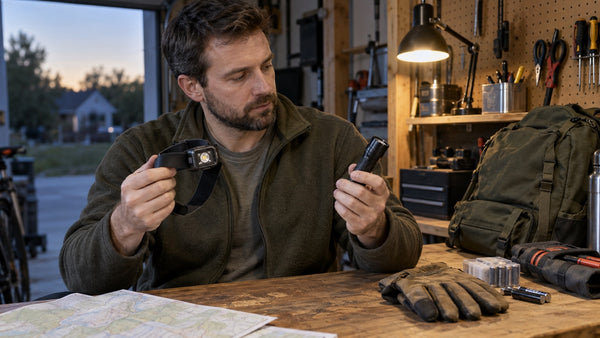
- Flashlight and spare batteries: A headlamp frees both hands. Keep spare batteries in a separate bag — temperature changes can drain them.
- BIC lighter and ferro rod: Two lighters is one too few. BIC lighters are wind-resistant and reliable. A ferro rod is backup for when lighter fluid runs out.
Shelter — Staying Warm When Everything Else Fails
Hypothermia kills in hours, not days. Even in summer, elevation and rain can drop core temperature fast. Your shelter system needs to be fast to deploy and capable of keeping you warm and dry through a night.
- Emergency blanket (mylar): Light, packable, reflects 90% of body heat. Keep two — one for warmth, one for ground insulation. Orange for visibility.
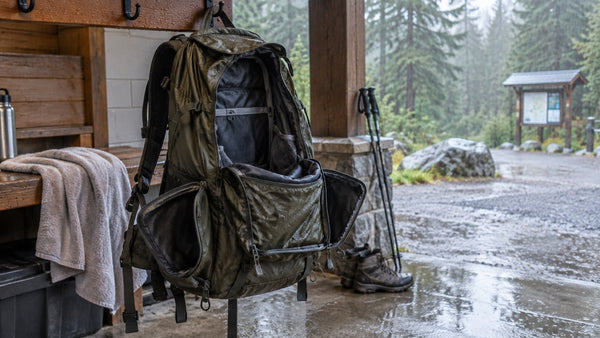
- 55L tactical backpack: A large-capacity tactical backpack is the foundation of any serious bug out bag. Look for MOLLE compatibility for add-on pouches, water-resistant fabric, and a frame that distributes weight to your hips rather than your shoulders. Military Overstock's 55L tactical backpack is built for exactly this — durable enough for extended carry, spacious enough for a full 72-hour kit, and MOLLE-equipped for modular expansion as your needs grow.
- Tarp or emergency tent: A silnylon emergency tent or 10x12 tarp with grommets sets up a shelter in minutes. Combined with paracord, it covers rain, wind, and insulation.
- Sleeping bag or quilt: A compressible down quilt or mummy bag rated to 30°F handles most environments. If you're in cold climates, a 0°F rating and a thermal liner add the margin you need.
- Ground foam pad: Inflatable pads are comfortable but vulnerable to puncture. Foam pads (Thermarest RidgeRest) are nearly indestructible and add critical insulation from cold ground.
Fire — Heat, Signaling, and Morale
Fire does three things: provides warmth, makes water safe to drink, and signals rescue. You need multiple ignition sources, and you need them accessible in any weather.
- Primary ignition: A quality lighter (BIC, Zippo) is your first option. Keep one in a waterproof bag inside your pack.
- Secondary ignition: A ferro rod is waterproof, windproof, and never runs out of fuel. Spark it over tinder to build a fire in any condition.
- Tinder: Dry tinder is the limiting factor in starting fires. Carry cotton balls coated in petroleum jelly, a Tinder Card, or a small bag of dryer lint. Keep it in a waterproof container.
Clothing — Pack for the Worst Conditions
Your clothing needs to layer, compress, and handle wet conditions. Everything below should fit inside your pack without dominating the available space.
- Base layer top and bottom: Merino wool or synthetic moisture-wicking layers. Cotton is death in wet/cold conditions — avoid it entirely in your kit.
- Insulation layer: A lightweight puffy jacket or fleece pullover that compresses well. Down works if kept dry; synthetic (AlphaDirect, Primaloft) works when wet.
- Rain layer: A quality rain shell handles wind and water. Frogg Toggs or similar budget waterproof/breathable jacket is fine — you don't need Gore-Tex in a kit you hope never to use.
- Boots: If you can wear them while bugging out, your footwear is already handled. If not, pack trail running shoes or low-cut hiking boots that dry fast. Blisters from wet boots end more evacuations than lack of water.
- Socks: Two pairs minimum. Merino wool — one hiking pair, one reserve pair sealed in a waterproof bag.
Documents and Communications — Your Paper Life Raft
When infrastructure goes down, digital records go with it. Paper copies of critical documents and a communication plan could be the difference between a smooth evacuation and a bureaucratic nightmare.
- Identification: Photo ID, passport if available, concealed carry permit if applicable in your state.
- Cash: Small bills — $200 in twenties and tens. ATMs are worthless in a grid-down scenario.
- Emergency contacts list: Written list of family contacts, rendezvous points, and out-of-area contacts who serve as a common link everyone knows to call.
- Insurance documents: Photos of critical policy documents (health, property) stored in a waterproof sleeve.
- Communication plan: Agree on a rally point before anything happens. Designate an out-of-area contact everyone checks in with. Text works better than voice when networks are congested.
Bonus Items — The Margin Makers
The items below aren't strictly required, but they make your kit significantly more capable. Budget weight and space for at least a few of these.
- Sunglasses and sunscreen: UV protection matters at elevation and in snow. Travel-size sunscreen and wrap-style glasses fit anywhere.
- Face mask or balaclava: Provides dust protection, warmth, and identity concealment. Merino wool balaclavas pack small and work in multiple temperature ranges.
- Tactical gloves: Cut-resistant shooting gloves or lightweight tactical gloves protect your hands during shelter building and obstacle clearing.
- Hand crank phone charger: Keeps a basic phone operational when no grid power is available. Combined with your radio, you have two redundant communication paths.
Bug Out Bag Weight — The Rule of Twenty
Aim to keep your fully-loaded bug out bag under 20% of your body weight. If you weigh 180 pounds, that's 36 pounds — roughly the weight of a medium-term hiking pack. Everything in this checklist fits comfortably within that limit if you make deliberate choices about quantities and product weight.
If your kit exceeds 20% body weight, audit ruthlessly. Every item should serve at least two purposes. If it doesn't, leave it. You can add items later when you have a realistic sense of your kit's actual carry weight.
Building Your Bug Out Bag on a Budget
You don't need to buy everything at once. Build your kit in priority order:
- Water and first aid (tourniquet first). These are life-savers. Buy them before anything else.
- 55L tactical backpack or go-bag. A quality bag that distributes weight correctly makes everything else carryable. See our full tactical backpack collection for options ranging from budget-friendly to premium.
- Shelter and warmth. Mylar blankets and a compressible sleep system.
- Tools and fire. Multi-tool, lighter, ferro rod, paracord, duct tape.
- Food and water treatment. Freeze-dried rations and a filter.
- Clothing and extras. Layer system and specialty items.
Bug Out Bag Maintenance — A Kit You Don't Maintain Is a Kit That Fails
A bug out bag that sits for two years without inspection is a liability, not an asset. Set a quarterly calendar reminder to check yours:
- Rotate food and water every 6 months
- Check batteries — remove them or rotate them annually
- Inspect tourniquet and first aid components for damage or expiry
- Verify clothing still fits and is season-appropriate
- Practice a practice pack — grab your bag and walk a mile. If something chafes, adjusts, or sits wrong, fix it before it's real
Frequently Asked Questions
What is the 20% rule for a bug out bag?
The 20% body weight rule means your fully-loaded bug out bag should weigh no more than 20% of your body weight. A 180-pound person carries no more than 36 pounds comfortably during an evacuation. Heavy kits cause fatigue, blisters, and injury — defeating the purpose of having a kit in the first place.
How much water should I carry in my bug out bag?
Aim for two liters per person per day minimum. Carry two one-liter bottles as your baseline and a water filter or purification tablets to treat additional water from streams or other sources as you find them. In hot climates or high-exertion scenarios, increase to three liters per day.
What size backpack do I need for a 72-hour bug out bag?
A 40–55 liter pack covers most 72-hour kits. Larger isn't always better — bigger packs encourage overpacking and add weight you'll feel after the first mile. If your full kit fits in a 40L pack, a 55L gives you room for expansion without being excessive. Military Overstock's 55L tactical backpack is MOLLE-equipped for modular add-ons as your kit grows.
Should I include a weapon in my bug out bag?
Weapons are situational and depend entirely on your threat model, legal environment, and training level. If you carry a firearm, it belongs in a secure, accessible holster — not buried in your pack. An AR-15 folding stock adapter lets you keep a compact rifle configuration that's fast to deploy and easy to transport. Training and legal compliance matter more than adding hardware to your kit.
Related Gear & Guides
- How to Build a 72-Hour Kit
- Get Home Bag vs. Bug Out Bag: What's the Difference?
- Shop Tactical Backpacks
- Shop First Aid & Survival
Editor's Note (Updated on April 29, 2026): Military Overstock has confirmed a limited surplus batch of bug out bag components with a 20% discount. Due to recent demand and positive coverage, this offer is available on a first-come, first-served basis while supplies last. Use code EDGE20 at checkout.
🔗 👉 CLICK HERE TO CHECK AVAILABILITY
⚠️ LIMITED SUPPLY AVAILABLE
Was this dispatch helpful?
Thanks for the feedback.

BattleGear™ 132-in-1 Precision Screwdriver Set - Tactical Repair Tool Kit with Magnetic Bits
132 Bits. One Tool. Zero Excuses When Your Gear Needs Fixing. When you're out in the field, at the range, or handlin...